
Physics Wallah, Unacademy, and similar platforms have genuinely changed what's available to a student in Aurangabad district — high-quality video lectures from well-known teachers, at a fraction of the cost of traditional coaching, accessible from any smartphone. For a family evaluating options, the honest question isn't whether these platforms are good, because in many respects they are. The honest question is what they're good at, and what they structurally can't replace, regardless of how good the content quality gets.
Video-based learning platforms excel at content delivery — explaining a concept clearly, at a pace the student controls, rewatchable as many times as needed. For a self-disciplined student who already knows how to structure their own study time, identify their own weak areas, and hold themselves accountable to a testing schedule, this can be genuinely sufficient, and considerably cheaper than a local institute.
What these platforms cannot do, by their nature, is watch a specific student's actual performance and intervene. An app doesn't know that a particular student consistently makes the same error in organic chemistry mechanisms, or that another student's mock test scores have quietly declined over three weeks. A human mentor who reviews a student's actual test papers can catch and correct these patterns; a video library, however well produced, simply cannot.
The self-discipline requirement is the honest crux of this comparison, and it's worth being direct about it rather than avoiding the topic. Online learning platforms work exceptionally well for the subset of students who are naturally self-directed — who will actually complete assigned problem sets without an external deadline, who will genuinely take a mock test seriously when no one is checking whether they did. For students who need external structure and accountability to stay consistent — which describes a large share of 15- and 16-year-olds, not through any fault of their own — an unstructured video library alone tends to result in inconsistent progress, regardless of content quality.
For families in Aurangabad district specifically, there's a practical dimension worth naming honestly: reliable, consistent high-speed internet access isn't universal across every town and village in the district. A student depending entirely on streaming video lectures is vulnerable to connectivity issues in a way that a physical classroom simply isn't. This isn't a reason to dismiss online platforms, but it is a real, practical factor worth weighing for families outside the main town centers.
A genuinely honest comparison also has to acknowledge cost. Online platforms are, in absolute terms, cheaper than local coaching for the same syllabus coverage, and for families where cost is the binding constraint, that matters and shouldn't be dismissed. The right question isn't 'which is objectively better' — it's whether the specific gap being paid for at a local institute (individual tracking, accountability, doubt resolution, exam-day practice) is worth the additional cost for this particular student.
Many students and families in Aurangabad district land on a hybrid approach, and it's worth naming as a legitimate third option rather than treating this as a binary choice. Using a structured local coaching program for the core curriculum, testing discipline, and individual mentorship, while supplementing with online video content for concepts that need a second explanation from a different teacher, combines the strengths of both rather than forcing a choice.
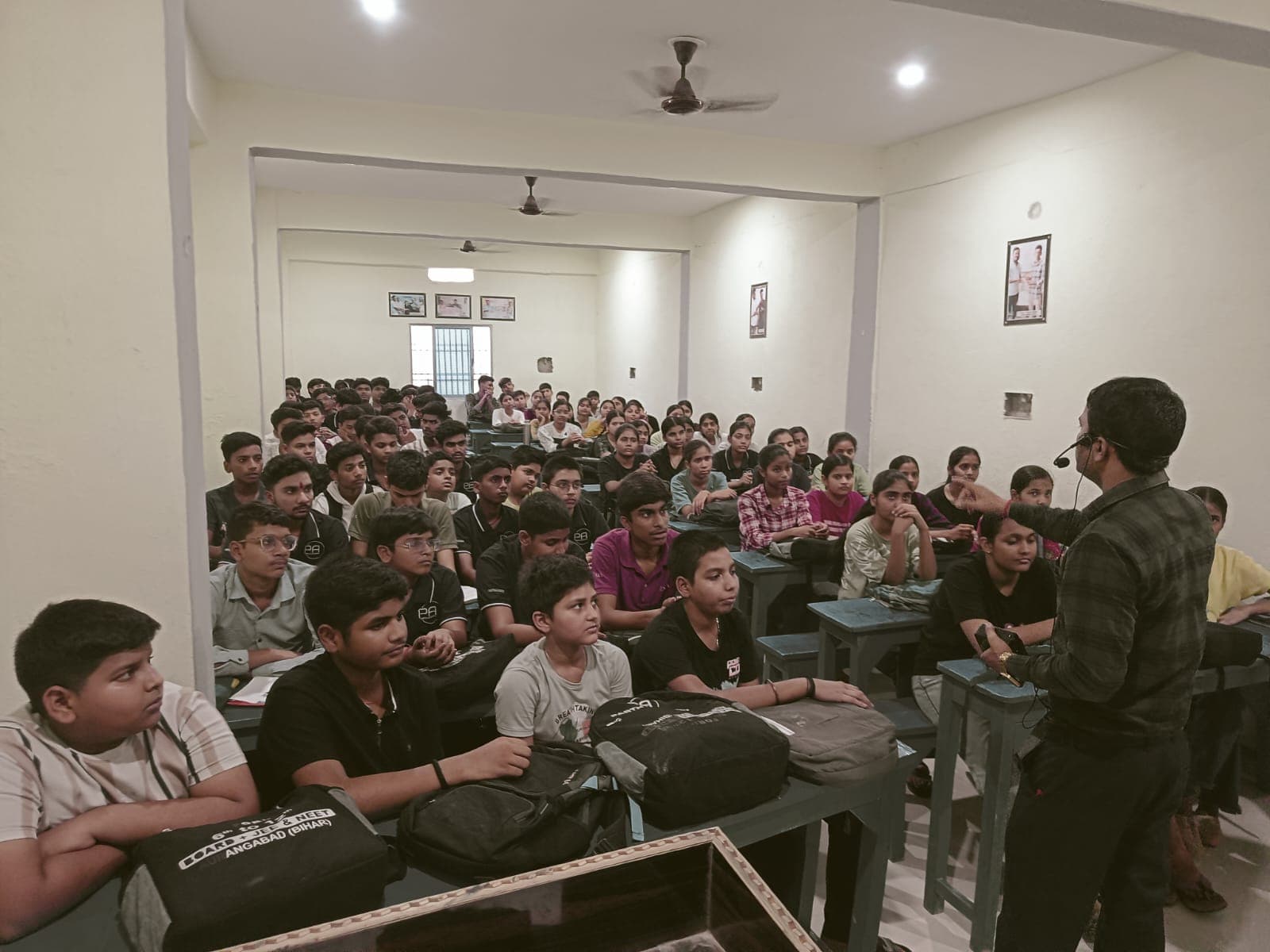
One area where local coaching has a structural advantage that's easy to underrate: same-day doubt resolution. A student watching a recorded video who gets stuck on a concept at 9pm has no one to ask until the next day at the earliest, and often simply moves on without resolving the confusion. A student in a local coaching batch has a mentor available the next morning, in person, who can address the exact confusion rather than a generic re-explanation of the same video.
Community and peer accountability is another dimension worth naming directly, since it's easy to underrate from outside. A student in a physical batch sees classmates studying, competing, and occasionally struggling in real time, which creates a social pressure toward consistency that a solitary student watching lectures alone rarely experiences. For students who are motivated by visible peer effort, this ambient accountability is a genuine, if intangible, advantage of a physical classroom that no app has fully replicated.
It's also worth being honest about content quality variance across online platforms, since not all of them are equal despite similar marketing. Some genuinely employ experienced, subject-specific faculty; others repackage generic content at scale. Before subscribing to any platform, a family should evaluate the actual teacher delivering a specific subject's lectures with the same scrutiny they'd apply to evaluating a local coaching institute's faculty — reputation and price point alone don't guarantee quality.
None of this is to say online platforms don't have a real place in a student's preparation — they clearly do, and dismissing them outright would be dishonest. The point is that the choice isn't really 'online versus offline' as competing alternatives; it's about matching the tool to what a specific student actually needs to stay consistent, accountable, and on pace.
It's also worth revisiting this decision periodically rather than treating it as fixed for the full two years. A student who starts with a local coaching program and demonstrates strong self-discipline over the first year might reasonably shift more preparation time toward supplementary online content in the second year. Equally, a student struggling with an online-only approach shouldn't feel locked into it out of sunk cost — switching to more structured support partway through is a reasonable, common adjustment, not a failure, and parents should periodically ask their child directly which approach still feels like it's working rather than assuming the initial choice remains right for the whole two years.
If your family in Aurangabad district is weighing online platforms against local coaching, the most useful diagnostic question is simple: has your child, in the past, reliably followed through on self-directed study plans without external accountability, across a full term and not just a single motivated week? The honest answer to that question should drive the decision more than either platform's marketing.